




News and stories
All stories
Stories that highlight the people and programs making healthcare more accessible across Oregon.
Company highlights
The innovative programming and achievements that reflect our commitment to quality care.
CareOregon culture
A look inside the people and values that make CareOregon a compassionate workplace.
Community impact
Partnerships and programs that strengthen health and wellbeing across Oregon communities.
Health and wellness
Tips and insights to support physical and emotional wellbeing for our members.
Building stability together: How Jackson Care Connect and ACCESS partnered to transform lives
Published March 27, 2026
-
 Copy link
 -
 Share on Facebook
 -
 Share on Bluesky
 -
 Share on X
 -
 Share on LinkedIn
- health equity
In communities across Jackson County in southern Oregon, the housing crisis is no longer a distant policy debate; it’s a daily reality. In 2025, there were over 1,100 people homeless in the county, and 36% of those were unsheltered.
Over the last two years, Jackson Care Connect (JCC) has met this crisis head-on by working with ACCESS — a community action agency with deep expertise in housing stabilization — to provide warmth, shelter and a long-term plan for vulnerable residents who would otherwise fall through the cracks of the social safety net. The partnership has led to an unprecedented and highly successful program that speaks to CareOregon’s core belief that housing is health care.
The roots of the SHARE Bridge Bed program
For many people, living unsheltered is rarely the result of a single decision. It is often the cumulative effect of untreated mental health conditions, substance use disorders, family instability, trauma and economic hardship. Once someone is on the street, the vulnerability compounds quickly. Without a safe place to sleep, it becomes nearly impossible to attend treatment appointments, deal with chronic health conditions, search for housing, maintain employment or even think about anything else beyond immediate survival.
Recognizing this critical “in-between” gap of people who were unstably housed, JCC partnered with ACCESS in 2024 to launch the ACCESS Transitional Bed Program, also known as the SHARE Bridge Bed program. The program, funded with $1.08 million in SHARE Initiative dollars, operated for approximately 18 months, ending in December 2025 after funds were fully spent. In all, the program served 254 people, including 48 children.
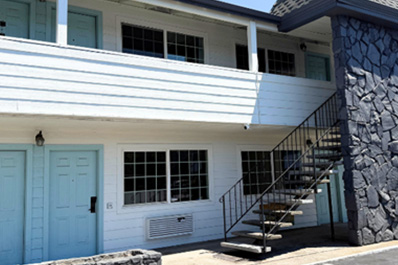
The goal was to provide short-term, private hotel rooms for individuals and families who had a housing plan in place but were at risk of slipping back into houselessness while waiting for their next step.
“These were people who had somewhere to go,” said Sam Watson, Director of Community Health Partnerships at JCC. “They just needed a safe place to land until they could get there.”
The next step looked different for every participant. Some were waiting for a lease to begin; others were preparing to enter residential substance use treatment. Some were fleeing domestic violence and needed temporary safety before moving into transitional housing. Others had identified permanent housing but lacked deposits or support to complete the move.
Without stability during that waiting period, many risked returning to the streets, relapsing or losing their housing opportunity altogether. The Transitional Bed Program addressed that vulnerability head-on.
Unique aspects of the SHARE Bridge Bed program
Flexibility
“The state and federal funds usually tend to be very focused on specific targeted types of beds,” said Melanie Doshier, Chief Program Officer at ACCESS. For example, this could be beds for people going through substance use treatment. “When there is a fund that gives you more flexibility to provide the bed to the service that is needed and not the other way around, we demonstrated what success can look like when the funding is flexible.”
Engagement
Unlike traditional shelter models, participation in the SHARE Bridge Bed program required engagement in case management. ACCESS focused its efforts on helping participants follow through on their individual housing plans. Staff coordinated appointments, ensured clients had identification and documentation, supported landlord communication and resolved barriers in real time.
“This [engagement] is really important, because if you're offering shelter or housing without the life skills support and case management, what you're doing is a temporary solution, and people are going to get to that same point of instability again,” Watson said.
Cross-sector collaboration
In addition, case managers did not attempt to replace behavioral health or substance use providers. Instead, the program relied on strong partnerships across sectors. Embedded behavioral health professionals and substance use disorder treatment providers worked alongside housing specialists to deliver true wraparound care.
That collaboration paid off. The program reported a success rate of more than 80% — meaning the vast majority of participants successfully transitioned to their identified next step, whether that was permanent housing, transitional housing or treatment.
“The success rates are a lot lower from people just coming out of traditional shelter models,” explained Watson. “This model combined temporary housing with robust, case management wraparound support that helped folks stay stable and move toward their next goals.”
Breaking down the keys to program success
Several elements contributed to the program’s positive outcome.
First, participants entered the program with a defined plan. Rather than serving as open-ended shelter, the beds functioned as a bridge from point A to point B. That focus created accountability and clarity.
“If you don’t know where you’re sleeping tonight, you’re not thinking about what happens in two weeks,” said Doshier. “Stability changes that.”
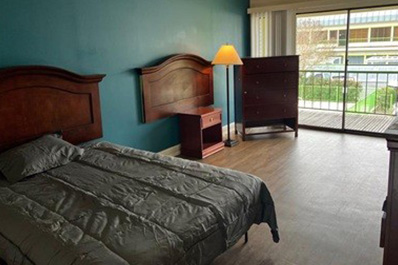
Second, funding flexibility allowed the program to respond to real-world needs. In addition to providing hotel stays, the program could help with security deposits and moving costs — barriers that frequently prevent people from securing housing even after they’ve found a unit.
Third, the model was intentionally trauma-informed and focused on harm reduction. Staff understood that many participants had experienced significant trauma. Providing a private, stable space — even temporarily — reduced immediate harm and gave individuals room to focus on long-term goals.
The program also revealed the diversity of need in Jackson County. While facilitators primarily expected to serve individuals awaiting treatment beds, the actual participant population included families, people exiting domestic violence situations and individuals transitioning into leased apartments. The data underscored that there is no one-size-fits-all solution to homelessness.
“We did something really exceptional together as a housing provider and an insurance company, and it had really tangible, impressive outcomes,” said Watson. “And we're proud of that.”
“I think our outcomes were phenomenal,” agrees Doshier. “We served way more people than we intended, and we had really high success rates. Our partnership with Jackson Care Connect is really solid.”
The housing-health connection
At its core, the Transitional Bed Program treated housing as a vital component of health
For JCC, the partnership reflected a broader understanding that stable housing directly impacts physical and behavioral health outcomes. When housing and health care systems align, communities see fewer emergency room visits, improved treatment adherence and stronger long-term outcomes.
And the benefits extend beyond immediate housing placement. Participants gained budgeting skills, navigation support and connection to employment services. Case managers helped individuals build realistic sustainability plans — not just secure house keys.
The long-term goal is about helping people maintain stability, engage in treatment when needed, reconnect with family, sustain employment and participate fully in community life.
“There’s not a single solution to the housing crisis,” Doshier said. “We need the entire continuum — from emergency shelter to permanent housing — with the right supports in place.”
What happens now?
The SHARE Bridge Bed program ended at the conclusion of the funding in 2025. It demonstrated what is possible when flexible funding, housing expertise and health care collaboration come together.
A SHARE Bridge Bed case study
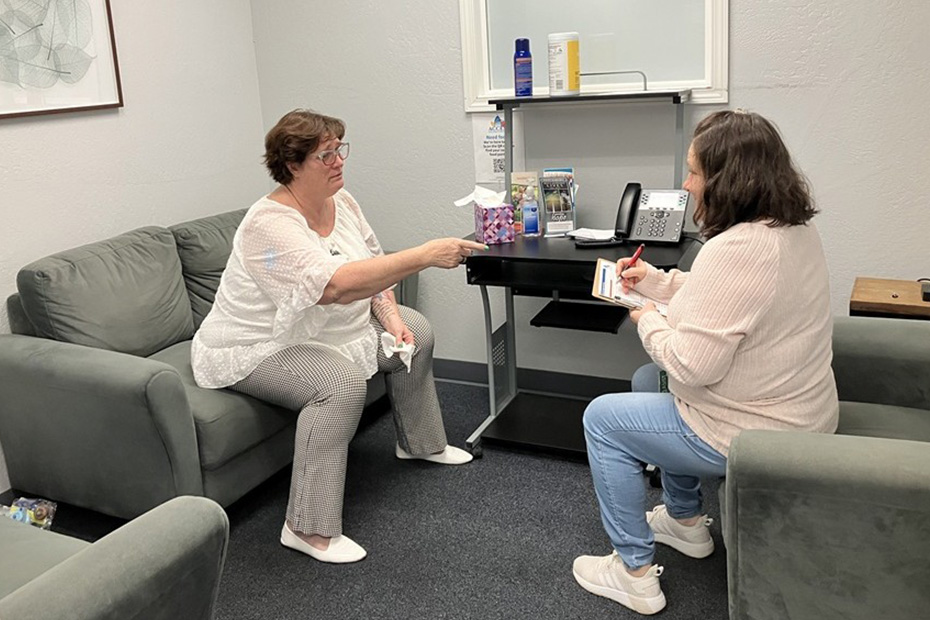
One program participant shared that she, her husband and their six children had been struggling with housing instability since their home burned down in 2021. They had bounced from staying with family, to hotels, camping, sleeping in cars and transitional housing. Although they looked for permanent housing, nothing was within their budget. ACCESS assigned them a landlord engagement specialist, who helped them build a rent portfolio and find a home after three years of houselessness. Through ACCESS and the Transitional Bed Program, they were able to get their move-in costs covered.
"I have a home to give my kids because you cared enough to stick with us until we were successful," said the participant.
“The amount of connection we were able to provide people, and the amount of humans that were able to get from point A to point B that would have otherwise been more difficult — I mean, you can't put a dollar on that,” Doshier says. “That's somebody's life that now forever is going to be changed because they were able to stabilize.”
There is currently no dedicated replacement for this type of transitional bridge support in the JCC region, and community partners worry about the consequences. Without a safe place to wait for treatment or lease start dates, more individuals may miss critical opportunities, more families may remain in unsafe situations, and more people may cycle back into homelessness.
The ACCESS Transitional Bed Program offered one vital piece of that continuum: a stable pause between crisis and opportunity. For hundreds of individuals and families in Jackson County, that pause made all the difference.
Investments in Action series
Our "Investments in Action" series highlights the transformative power of CareOregon's strategic investments in health and wellbeing. Through these stories, we explore how our support goes beyond traditional funding roles and is helping to close gaps in health care access and community services. Despite challenges within the Medicaid space, we remain committed to centering these important narratives of community strength and resilience.