




News and stories
All stories
Stories that highlight the people and programs making healthcare more accessible across Oregon.
Company highlights
The innovative programming and achievements that reflect our commitment to quality care.
CareOregon culture
A look inside the people and values that make CareOregon a compassionate workplace.
Community impact
Partnerships and programs that strengthen health and wellbeing across Oregon communities.
Health and wellness
Tips and insights to support physical and emotional wellbeing for our members.
Colorectal Cancer Awareness Month: Why regular screenings matter
Published February 26, 2026
-
 Copy link
 -
 Share on Facebook
 -
 Share on Bluesky
 -
 Share on X
 -
 Share on LinkedIn
- prevention
March is Colorectal Cancer Awareness Month, a time designed to raise awareness about the disease and encourage screening. CareOregon members can get screened at no-cost. Colorectal cancer is a cancer that starts either in the colon or the rectum. Colorectal cancer is the third-most common cancer in both men and women, and the second-most common type of cancer death in men and women combined. Although the average age of diagnosis is 68 years old, individuals can develop the cancer much earlier. Because it often does not have any symptoms, most people won’t know they have it unless they get screened.
“Colon cancer is very treatable if found in early stages, and polyps or growths in the colon can be removed,” says Safina Koreishi, MD, MPH, CareOregon’s Senior Medical Director of Clinical Services. When caught early, the 5-year survival rate for colon cancer is 90 percent.
Get screened. Early detection saves lives.
The importance of colorectal cancer screening
If you are low risk, meaning you have no family history of the disease, a stool test can be used to detect signs of early colon cancer.
The fecal immunochemical test (FIT) looks for hidden blood in the stool, which may be early evidence of polyps or cancer. Stool tests are done every 1-3 years. These are easy to use and have very low/no risk. If they are positive, though, you will need to get a colonoscopy.
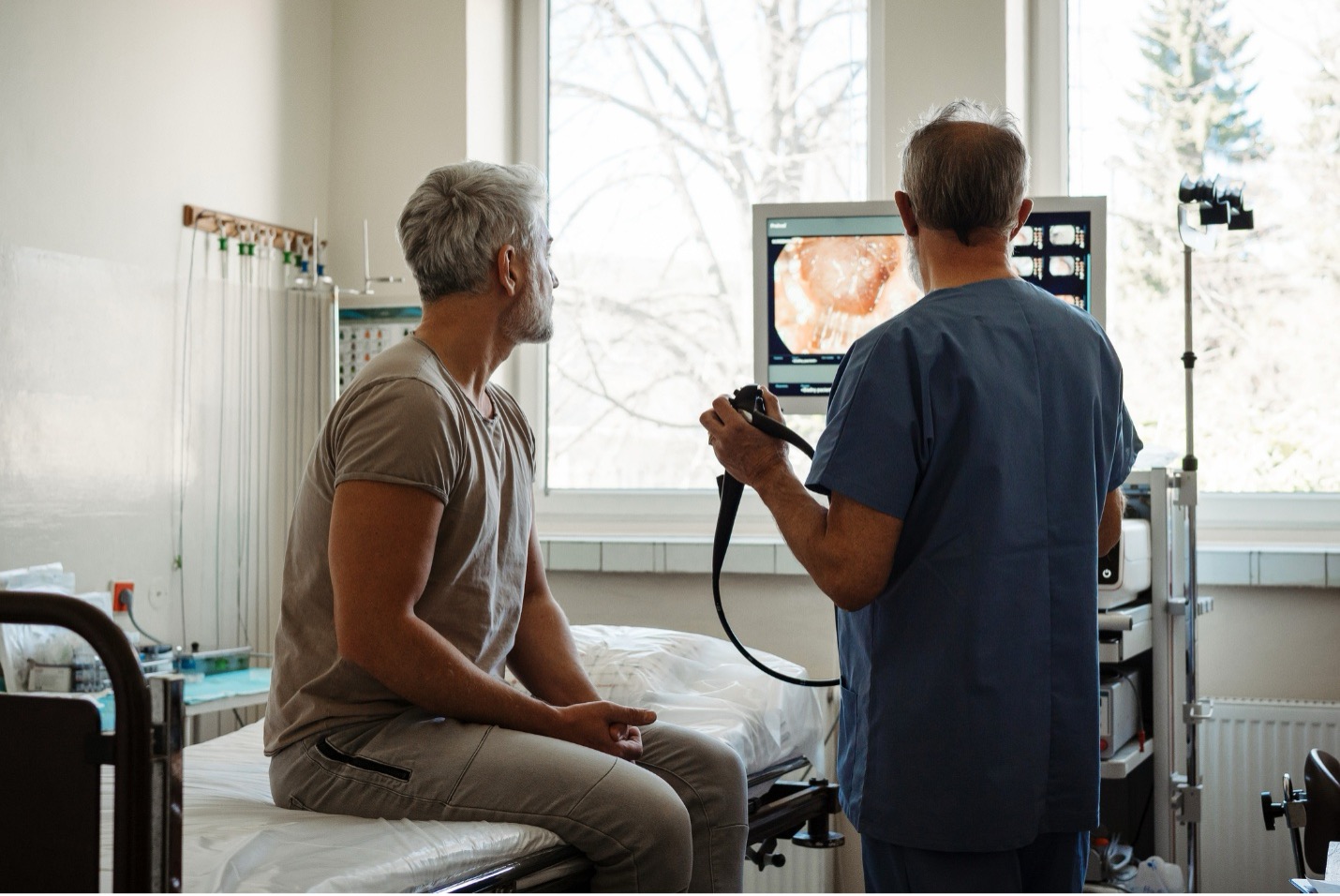
Colon cancer screening is often done by undergoing a colonoscopy, a medical procedure that examines the entire large intestine—the colon—with a thin tube that has a camera, called a colonoscope. This is a great test to screen for polyps, which can also be removed at the same time. This test does require some preparation ahead of time and may have some risks. This is the best test if you are at higher risk, or it might be chosen as the best method by you and your doctor.
When should I get screened for colon cancer?
Because the risk of colon cancer is increasing, and happening at earlier ages, “the recommendation is to get screened for colorectal cancer starting at age 45. This is a change from previous recommendations, which was starting screening at age 50,” says Dr. Koreishi. If you have a family history of colon cancer, polyps or inflammatory bowel disease, your doctor will likely recommend that you start screening earlier.
From ages 45-75, general screening recommendations are:
- Stool test (FIT) done every 1-3 years depending on the test
- A colonoscopy every 10 years
Your personal screening or monitoring/follow up schedule may change if your doctor finds polyps during a test. “If something is found and treated, then the testing interval will change, and you should follow your doctor’s recommendations,” says Koreishi. Your personal screening is also affected by your family history.
After age 75, your doctor may suggest no longer screening for colon cancer, depending on your health.
How to get screened for colon cancer
If you need a screening or a test, contact your primary care provider (PCP). Or call CareOregon Customer Service at 503-416-4100, toll-free 800-224-4840 or TTY 711, 8 a.m. to 5 p.m. Monday through Friday. You can also send us a secure message through our Member Portal at careoregon.org/portal.
Colon cancer screening can offer you peace of mind that you are healthy, or if you do have polyps, that you are catching them early when they are easiest to treat. Colon cancer screening just might save your life!